Does a food influencer have to disclose a free meal?
A creator eats your birria tacos on the house and films every dip into the consommé. The reel looks great. The caption says only “best tacos in town.” Nothing says the meal was free. That missing line is your problem too.
Yes, in the US. A creator who eats on the house should say so in the post. FTC guidance says to name the free meal and who gave it. That holds even if you never asked for a post. The FTC expects you to ask creators to disclose and check their posts. A platform label alone is not enough.
CreatoRain Team8 min read
CreatoRain is a done-for-you restaurant influencer marketing service for chains and franchises: CreatoRain's in-house team finds, invites and pays food creators and follows up until each video is posted.

What does the FTC mean by a “material connection”?
A material connection is any tie between your restaurant and the person posting about it that could change how much their followers trust the post. In FTC guidance, it can be money, free or discounted products, other perks such as early access, or a business, family or personal relationship.
Having a connection is fine; leaving it out of the post is the problem. A connection has to be disclosed when it could affect how followers weigh the post and they wouldn’t expect it. It doesn’t take most followers being in the dark: if a meaningful share of them wouldn’t know about the tie, it should be disclosed. Creators shouldn’t assume their followers already know.
The disclosure doesn’t need the details of the deal, only enough for followers to judge the connection for themselves. And a creator who is sure the meal didn’t change their opinion should still disclose it.
What does a missing disclosure look like from behind the counter?
The creator wasn’t hiding anything; nobody had told her what the restaurant expected. The FTC puts part of closing that gap on you.
Does a comp meal count if you never asked for a post?
Any comp can count. The FTC’s advice to creators is blunt: “If a brand gives you free or discounted products or other perks and then you mention one of its products, make a disclosure even if you weren’t asked to mention that product.”
Comps that call for a disclosure
- A full meal on the house
- A free dessert, drink or tasting plate
- A discount on the bill
- Early access, such as a seat at a preview night
- A free meal for a friend or relative who then posts about it
The FTC has answered the restaurant case directly. A new restaurant’s owner asked whether friends and family who eat free and post about it should disclose. The answer: anyone given a free meal and asked for an endorsement, relative or stranger, should disclose it. And even without an ask: “Even if you didn’t specifically ask for an endorsement, people reading those social media messages would probably want to know that the meal was on the house.”
The FTC sets no dollar amount below which a comp stops counting. On small gifts, it says the call can be hard to make and that it’s always safer to disclose. So when all you comp is a dessert, ask for the disclosure anyway.
When does a creator have nothing to disclose?
| Situation | Disclose? |
|---|---|
| The creator paid their own bill and has no other tie to your restaurant | No, and they needn’t announce that there is no deal |
| A comped visit, but the post doesn’t mention or show your restaurant, with no tag or other clue to where it was taken | No |
| The creator paid the bill but has an ongoing relationship with your restaurant | Yes |
| A friend or relative posts about your restaurant | Yes: say they are your friend or relative |
| A member of your staff posts about where they work | Yes: say they work there |
Paying doesn’t erase other ties. The FTC also excuses a connection followers already understand, or one too small to matter. A comp meal rarely fits either: the FTC tells restaurant reviewers who get free meals to let their readers know, and with a small comp, disclosing is the safer call.
Why is a missing disclosure your problem too?
If a comped creator leaves the disclosure out, your restaurant can be held liable too. Under FTC guidance, a business can be liable for failing to disclose an unexpected connection with the people endorsing it. The guidance adds: “An advertiser may be liable for a deceptive endorsement even when the endorser is not liable.”
- posted commercial content
- 97% of them
- systematically told followers it was advertising
- Only one in five
If the FTC acts, its focus will usually be on the business or its agency, not the creator, though a creator who ignores warnings to disclose may face action too. And if an agency runs your creator outreach, you are still responsible for what it does on your behalf.
What the FTC asks of every business that works with creators
- Tell creators to disclose
- Check what they post
- Fix the problems you find
Doing all three in good faith, and doing them well, is not a safe harbor, but it should lower your odds of facing an FTC case.
Which words work as a disclosure, and which tags do not?
The clearest disclosure says the meal was free and who gave it. A simple thanks that names your restaurant and the free meal is often enough if it’s hard to miss. So are “ad” and “sponsored” at the start of a post. A hashtag is optional, and #ad works for a free meal as well as a paid post.
| Works, if hard to miss | Falls short |
|---|---|
| “#ad” or “Ad:” at the start of the post | “sp,” “spon” or “collab” |
| “Thanks to @yourrestaurant for the free meal” | “thanks” or “ambassador” on its own |
| “Complimentary meal from @yourrestaurant” or “#gifted by @yourrestaurant” | A bare #gifted, or “I got a free meal,” with no restaurant named |
Followers don’t know what “sp,” “spon” or “collab” mean. A bare #gifted doesn’t say who gave the meal. The FTC calls it likely to be ambiguous. Naming the brand with it should be enough when a free product is all the creator received.
Ask for #ad plus a thanks that names your restaurant, so followers know both that it’s an ad and whose ad it is. And match the language of the post: a video in Mandarin needs its disclosure in Mandarin.
Where in the post should the disclosure go?
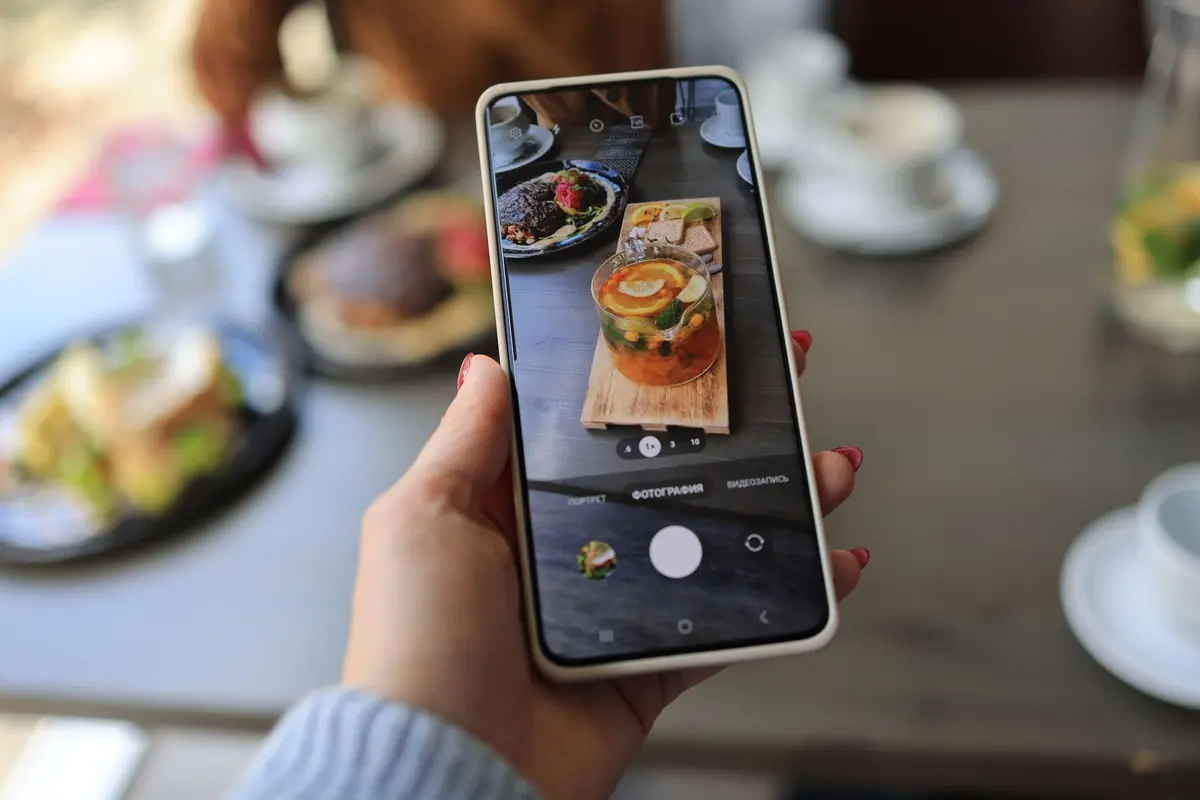
Put the disclosure in every post, where nobody has to tap “more” to see it. FTC guidance says a disclosure on social media should be unavoidable. The FTC’s advice to creators adds that some disclosures are likely to be missed. That includes one that sits only in a profile, at the end of a post or video, or behind “more”.
If one visit becomes a TikTok, a Reel and a Short, each needs its own disclosure, because the connection should be disclosed everywhere the creator endorses your restaurant. Stories get their own instruction from the FTC: “superimpose the disclosure over the picture and make sure viewers have enough time to notice and read it.”
| Post type | What works | What to avoid |
|---|---|---|
| Instagram or Facebook photo post | Start of the caption, before “more,” and possibly on the photo too, if people would get the recommendation without reading the caption | After “more,” in a pile of hashtags, or in a comment |
| Reel, TikTok or other video | In the video, ideally spoken and on screen | The caption only, or TikTok’s toggle alone |
| Instagram Stories | Words over the Story, readable in the time it shows | Only the profile or bio |
TikTok’s Branded Content Policy covers posts made in exchange for “payment or any other incentive”. It requires creators to turn on its commercial content disclosure toggle, so a TikTok made for a comp meal needs it. The FTC calls a platform tool like that “no guarantee” of a good disclosure, so ask creators to turn it on and also say it in their own words.
Can a Google or Yelp review be part of the comp?
A disclosure makes a comped post honest. It does not make a comped review allowed. Google and Yelp both ban reviews given in exchange for a free meal, and neither makes an exception for a review that discloses it.
| Who | What they say |
|---|---|
| Google Maps content policy | Businesses may not offer incentives, including free goods or services, for any review; reviews paid for directly or in kind will be removed |
| Yelp | Don’t offer freebies, discounts or payment for reviews, and don’t ask anyone for a review at all. It can put a pop-up alert on the page of a business offering incentives |
| FTC Q&A on its reviews rule | Paying for 5-star reviews on review sites breaks the rule even if you ask reviewers to disclose the payment |
The reviews rule is an FTC rule, not just guidance, and courts can impose civil penalties for knowing violations. So invite the creator to post, and leave reviews out of the conversation.
When should you agree on the disclosure?
Put the disclosure ask in writing when you offer the meal. Your invitation is where you ask for the disclosure, tell them how to make it and ask for a tag. The FTC names all three as the minimum even for a business that only sends out free products. Giving them the exact words is the easiest way to do the second.
Put these in every invitation
- The meal is on you, and anything they post should say so
- The exact words and where they go, such as “#ad — thanks to @yourrestaurant for the free meal” at the start of the caption and in the video
- A tag for your restaurant, so their posts are easier to find
- A request for their honest take, good or bad
- That it covers every post on every platform, and that reviews are not part of the deal
Tell creators what to disclose, never what to think of the food. An endorsement has to reflect the creator’s honest opinion or experience.
How long should you keep watching for new posts?
Keep looking for new posts about your restaurant for at least a few months after each comp. There is no set schedule, and those few months aren’t a hard cutoff: depending on the facts, a later post can still be your responsibility.
The visit
If they plan a Story
Ask to see it before it goes up
Stories disappear, so checking afterwards may be too late.
Regularly after that
Search your tag and location
Don’t wait for creators to send links.
For each new post
Look for the disclosure in the post itself
If it’s missing
Ask for the post to be fixed
For paid posts, the FTC’s answer to disappearing Stories is approval in advance. Asking to see a comped creator’s Story first is our advice, not an FTC rule. If regular checking is more than you can manage, ask to see every post before it goes up.
You don’t have to catch every word, but you do have to make a reasonable effort. The FTC says one creator who goes rogue is unlikely to lead to a case against a business. That holds when the business makes a reasonable effort to train its creators, check their posts and act on problems.
What if a post has no disclosure?
Ask the creator to edit the post itself, right away. A note in the comments doesn’t fix it; the FTC says “A disclosure in the comments to a post is easily avoidable and thus not clear and conspicuous.” For a video, the disclosure belongs in the video itself, so fixing it can mean re-editing the video and posting a corrected version.
When a post goes up without a disclosure
- Message the creator the same day, with the exact words you want added
- Ask for the fix in the post or the video, not in a comment
- Check every copy: the same video on another platform needs the fix too
- Note when you asked, what you asked for and when the post changed (our advice, not an FTC rule)
If a creator won’t fix it, or keeps missing, stop comping them. For a restaurant, not offering the next meal is the simplest way to keep a miss from happening again. If you ever receive a letter from the FTC about a creator’s post, talk to a lawyer before you reply.
Sources and method
Where each number comes from
- “5-star reviews” — The Consumer Reviews and Testimonials Rule: Questions and Answers (FTC, November 2024). Read September 18, 2026.
- “97%” — Press release IP/24/708 on the influencer sweep (European Commission, February 14, 2024). Read October 1, 2026.
- “one in five” — Press release IP/24/708 on the influencer sweep (European Commission, February 14, 2024). Read October 1, 2026.
- “576 influencers” — Press release IP/24/708 on the influencer sweep (European Commission, February 14, 2024). Read October 1, 2026.
- “February 2024” — Press release IP/24/708 on the influencer sweep (European Commission, February 14, 2024). Read October 1, 2026.
- “$53,088 per violation” — FTC Publishes Inflation-Adjusted Civil Penalty Amounts for 2025 (FTC press release, February 11, 2025). Read October 1, 2026.
Pages quoted in this article
- 16 CFR § 255.0, Purpose and definitions (Endorsement Guides, via Cornell LII) Read September 18, 2026.
- 16 CFR § 255.1, General considerations (Endorsement Guides, via Cornell LII) Read September 18, 2026.
- 16 CFR § 255.5, Disclosure of material connections (Endorsement Guides, via Cornell LII) Read September 18, 2026.
- Disclosures 101 for Social Media Influencers (FTC, November 2019) Read October 1, 2026.
- FTC’s Endorsement Guides: What People Are Asking (FTC, June 2023) Read September 18, 2026.
- The Consumer Reviews and Testimonials Rule: Questions and Answers (FTC, November 2024) Read September 18, 2026.
- Press release IP/24/708 on the influencer sweep (European Commission, February 14, 2024) Read October 1, 2026.
- FTC Publishes Inflation-Adjusted Civil Penalty Amounts for 2025 (FTC press release, February 11, 2025) Read October 1, 2026.
- Prohibited and restricted content, Maps User Generated Content Policy (Google) Read September 18, 2026.
- Don’t Ask for Reviews (Yelp Support Center) Read September 18, 2026.
- Branded Content Policy (TikTok, published August 2026, effective August 31, 2026) Read September 18, 2026.
Related questions
All 12 guides on Working with creators →Run more than one location? See how CreatoRain works for restaurant chains. See real campaigns in our case studies.