How do you sell catering to offices?
Somewhere near your store, an office manager has to feed a team meeting next Tuesday. They want a set menu, a clear price per head and food that arrives on time. Make that first order easy, and the next one becomes routine.
Pick ten offices within a short drive of each store. Offer three drop-off packages priced per person. Leave a small sample tray at each office on a Tuesday morning. Deliver early and clean up before you go. Before you leave, book the same day next month. A standing office lunch fills weekday hours without using a seat.
CreatoRain Team6 min read
CreatoRain is a done-for-you restaurant influencer marketing service for chains and franchises: CreatoRain's in-house team finds, invites and pays food creators and follows up until each video is posted.

Why are local offices worth chasing for catering?
An office order is bigger than a dinner check. It also tends to repeat. ezCater runs a catering marketplace for workplaces. Its average order rose to $420, for 25 people on average.
- average order value on ezCater
- $420
- of organizations surveyed run a recurring meal program
- 43%
- of employees who first tried a restaurant at work later ordered from it themselves
- 70%
- of restaurant decision-makers planned to prioritize catering
- 48%
The order is large. Many offices order on a schedule. And the people who eat your food become guests on their own time. Toast’s survey asked 755 restaurant decision-makers. Every one of them ran 16 or fewer locations. That is the size of group this guide is for. And catering sales need no extra seats in your dining room.
What should a franchisee check before selling catering?
Check with your franchisor before you sell catering. Many brands already run a catering program. Some run it through a national ordering site. Before you print a menu, find out what yours allows.
Ask your franchise business consultant
- Does the brand already have a catering menu and price list?
- Must catering orders go through a brand ordering site?
- May we set our own delivery area, smallest order and lead time?
- Which packaging and labels are approved for drop-off orders?
- Can we use the brand name on a local catering flyer?
Keep the answers in writing. If the brand menu exists, your job is the local part. That means the offices near your store, the sample trays and the reorders.
What should an office drop-off menu include?
Office buyers choose fast. Give them three or four packages, each with a clear headcount. ChowNow, an online ordering company, sees the same shape in its catering research. Many catering orders are everyday group meals for 20 to 50 people. They are often booked less than a week ahead.
| Package | Good for | What goes in it |
|---|---|---|
| Boxed lunches | Meetings and training days | One main, one side and a cookie, labelled by name |
| Platters | Team lunches | Sandwiches or wraps, a salad and a dessert tray |
| Build-your-own bar | Larger groups | A protein, a base, toppings and sauces, packed apart |
| Breakfast box | Early meetings | Pastries or wraps, fruit and coffee carriers |
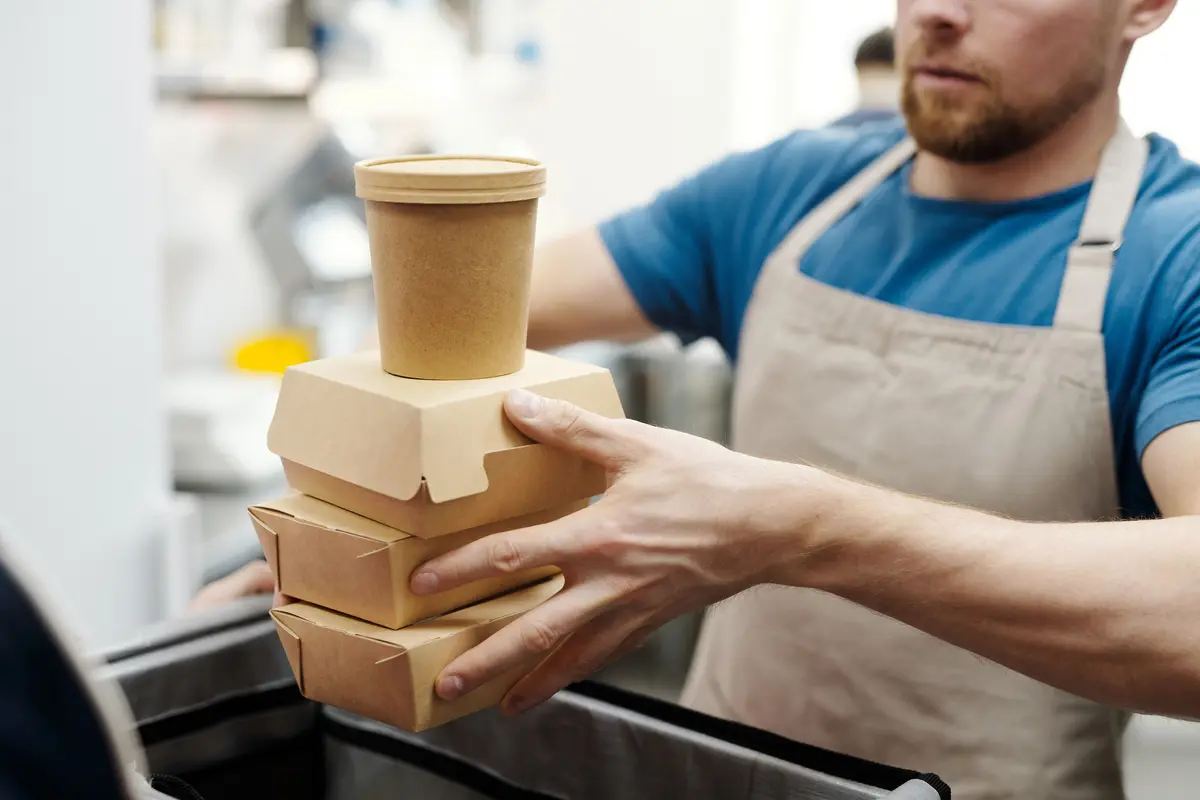
Print the rules on the menu itself. Show the smallest order you take, the lead time, the delivery area and the delivery fee. Say what comes with every order: plates, napkins, utensils and serving tools. Mark allergens on every item. A buyer who sees all of this can order without calling you.
How do you price office catering per person?
Office buyers think in heads, so price per person. ezCater’s averages work out to about $16.80 a person. Treat that as a check on your number, not a target. Your own food cost and delivery run set the real floor.
| Cost | What to count |
|---|---|
| Food | Every portion at your supplier price, plus a little extra |
| Packaging | Boxes, trays, lids, labels, cutlery and napkins |
| Labor | Prep, packing and the delivery run, door to door |
| Delivery | Fuel or mileage, parking and any building check-in time |
| Payment | Card fees, since offices often pay by company card |
Then set a smallest order that covers the delivery run. Charge a delivery fee by distance, or build it into that order size. Send an itemized receipt after each order. Office buyers often need one to claim the expense.
Which offices should you approach first?
Start close. Draw a short drive around your store and list the offices inside it. ChowNow suggests places that already order food, such as medical offices, law firms, schools and dealerships. Add banks, real estate offices and companies that host training days.
Offices that tend to order lunch often
- Doctor and dental offices with daily staff lunches
- Law and accounting firms with client meetings
- Car dealerships with sales meetings
- Schools and district offices with staff days
- Real estate and insurance offices with team meetings
- Any company that runs training sessions
Then pick your day. Offices are fullest midweek. Kastle Systems publishes a weekly office occupancy barometer. In one week of December 2025, it measured average office occupancy at 56.3%. That was its highest weekly average since early 2020. Tuesday was the peak day, at 66.0%.
- average occupancy across all office buildings
- 56.3%
- occupancy on Tuesday, the peak day
- 66.0%
A full office orders more lunch. So plan your sample visits and your delivery staff around midweek.
How do you run a sample-tray drop?
A sample tray beats a cold email. It puts your food in front of the person who decides. Keep it small, and make every visit the same.
Call ahead
Ask who orders lunch for meetings, and get their name.
On a Tuesday morning
Drop the tray
A small platter, a printed menu and a card with a QR code.
Two days later
Follow up once
A short email with the menu link and your lead time.
When they reply
Offer a first order
Suggest a package that fits their usual headcount.
After delivery
Book the next one
Ask for the same day next month.
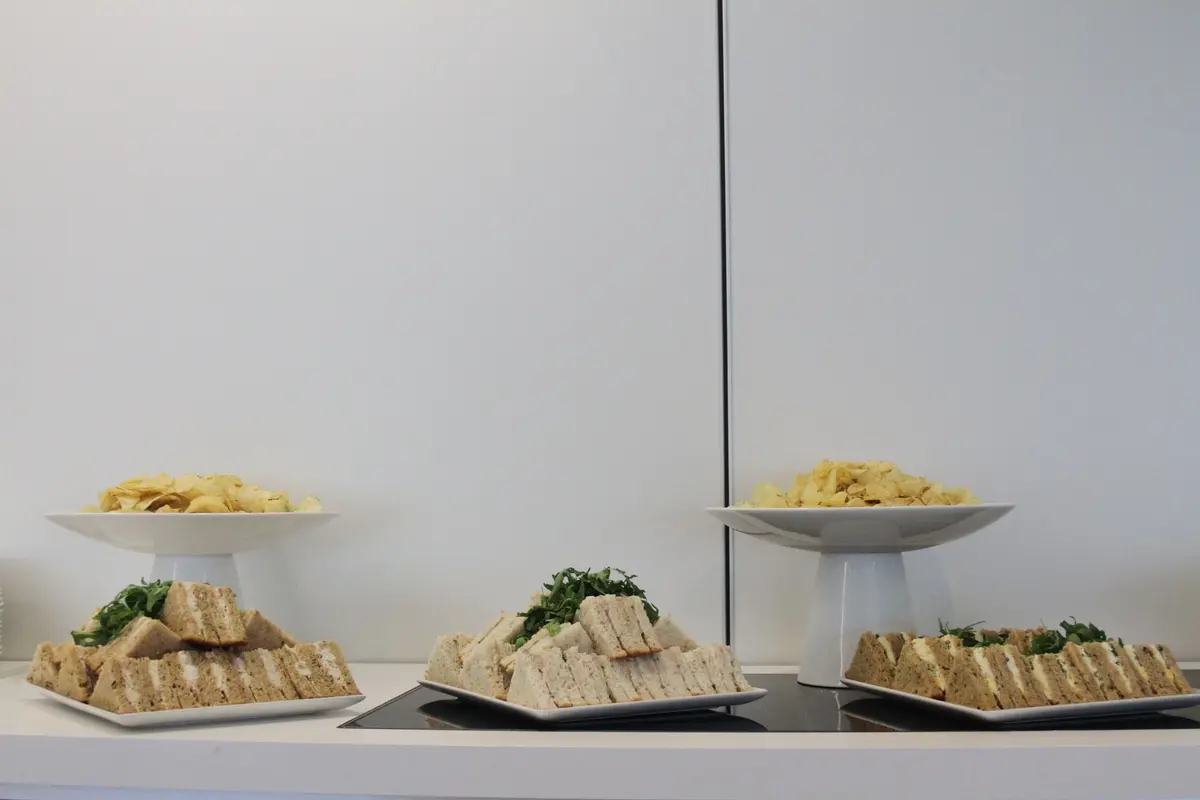
Bring food that holds well at room temperature. Cookies, pastries and wrapped sandwiches travel well. Put a label on the tray with the time it was made. The FDA says to discard perishable food left out for more than 2 hours.
What makes the delivery itself win the reorder?
The office remembers the drop-off more than the menu. Your driver is often the only person from your store they meet. Many office buildings also make drivers check in at security first. Plan for that time.
A drop-off routine for every office order
- Arrive early, and call your contact from the lobby
- Set the food out, with labels for each item and allergen
- Bring plates, napkins, utensils and serving tools
- Leave a printed menu and a reorder card
- Clean up your packaging before you leave
- Text the contact a thank-you that afternoon
Keep food at safe temperatures on the way and on the table. The FDA’s buffet guidance says to hold hot food at 140 °F or warmer. Cold food should stay at 40 °F or colder. Pack hot items in insulated carriers, and cold items on ice.
How do you turn one order into a monthly order?
The second order is where catering pays. Ask for it while the first one is fresh. ChowNow suggests a short note to past catering buyers before busy seasons. It also suggests a reorder card inside each catering order.
Ask for a review after a good delivery. ChowNow notes that reviews mentioning on-time delivery reassure the next office buyer. Our guide on getting more Google reviews shows how to ask without pressure.
How else can offices find your catering?
Sample trays reach the offices you choose. Other channels reach the buyers who search on their own. To set up the search ads, see Google Ads for one restaurant location.
| Channel | What to do |
|---|---|
| Google Business Profile | Mention catering, and link to the catering menu |
| Your website | Put catering in the main menu, one click from the home page |
| Takeout bags | Add a card that says you cater office lunches |
| Your dining room | Place a QR code by the register |
| Search ads | Bid on catering searches within your delivery area |
| Social video | Show your team packing a large office order |
Office managers like to see an order before they place one. A food creator can film your team loading a lunch route. CreatoRain’s in-house team books creators from its food-creator network for weekday clips like that. You pay $300 a video, and the creator gets paid from that amount.
What should you track once office orders start?
Keep one simple sheet per store. Review it each month with your managers.
Five numbers for each store, each month
- Sample trays dropped, and first orders that followed
- Offices that ordered a second time
- Average headcount and price per person
- Late or short deliveries
- Standing monthly orders on the calendar
The reorder count matters most. A store with a handful of standing lunches has steady weekday sales. If first orders come in but reorders do not, check the delivery routine before you spend more on trays.
Sources and method
Where each number comes from
- “$420” — New ezCater Data Highlights Workplace Food as a Key Growth Driver for Restaurants (ezCater via Business Wire, May 5, 2025). Read October 7, 2026.
- “25 people” — New ezCater Data Highlights Workplace Food as a Key Growth Driver for Restaurants (ezCater via Business Wire, May 5, 2025). Read October 7, 2026.
- “43%” — New ezCater Data Highlights Workplace Food as a Key Growth Driver for Restaurants (ezCater via Business Wire, May 5, 2025). Read October 7, 2026.
- “70%” — New ezCater Data Highlights Workplace Food as a Key Growth Driver for Restaurants (ezCater via Business Wire, May 5, 2025). Read October 7, 2026.
- “$16.80 a person” — ezCater’s reported average order value ($420) divided by its reported average headcount (25): $420 / 25 = $16.80 a person. Both inputs are from the ezCater release of May 5, 2025, linked under Sources. Measured October 7, 2026.
- “2024” — Why catering can drive growth, from holiday feasts to everyday celebrations (Julie Powell, Toast, in Nation’s Restaurant News, December 10, 2024). Read October 7, 2026.
- “48%” — Why catering can drive growth, from holiday feasts to everyday celebrations (Julie Powell, Toast, in Nation’s Restaurant News, December 10, 2024). Read October 7, 2026.
- “755” — Why catering can drive growth, from holiday feasts to everyday celebrations (Julie Powell, Toast, in Nation’s Restaurant News, December 10, 2024). Read October 7, 2026.
- “16 or fewer locations” — Why catering can drive growth, from holiday feasts to everyday celebrations (Julie Powell, Toast, in Nation’s Restaurant News, December 10, 2024). Read October 7, 2026.
- “20 to 50 people” — 9 Catering Marketing Ideas to Grow Restaurant Sales (Louise Dalangin, ChowNow, April 15, 2026). Read October 7, 2026.
- “56.3%” — Kastle Back to Work Barometer Hits All-Time Post-Pandemic Highs (Kastle Systems, December 18, 2025). Read October 7, 2026.
- “66.0%” — Kastle Back to Work Barometer Hits All-Time Post-Pandemic Highs (Kastle Systems, December 18, 2025). Read October 7, 2026.
- “early 2020” — Kastle Back to Work Barometer Hits All-Time Post-Pandemic Highs (Kastle Systems, December 18, 2025). Read October 7, 2026.
- “more than 2 hours” — Serving Up Safe Buffets (U.S. Food and Drug Administration). Read October 7, 2026.
- “140 °F” — Serving Up Safe Buffets (U.S. Food and Drug Administration). Read October 7, 2026.
- “40 °F” — Serving Up Safe Buffets (U.S. Food and Drug Administration). Read October 7, 2026.
- “$300” — As published on our pricing page.
Pages quoted in this article
- New ezCater Data Highlights Workplace Food as a Key Growth Driver for Restaurants (ezCater via Business Wire, May 5, 2025) Read October 7, 2026.
- Why catering can drive growth, from holiday feasts to everyday celebrations (Julie Powell, Toast, in Nation’s Restaurant News, December 10, 2024) Read October 7, 2026.
- 9 Catering Marketing Ideas to Grow Restaurant Sales (Louise Dalangin, ChowNow, April 15, 2026) Read October 7, 2026.
- Kastle Back to Work Barometer Hits All-Time Post-Pandemic Highs (Kastle Systems, December 18, 2025) Read October 7, 2026.
- Serving Up Safe Buffets (U.S. Food and Drug Administration) Read October 7, 2026.
Related questions
All 4 guides on Delivery & catering →Run more than one location? See how CreatoRain works for restaurant chains. See real campaigns in our case studies.