How do you price a limited-time offer so it makes money?
A new item gets weeks of work in the test kitchen. Its price often gets a few minutes at the end. Yet that price decides whether the launch pays. It also decides whether guests come back for the next one.
Start from the plate cost, with packaging and a waste allowance added. Divide it by your target food cost, often around 30%. Then set the price at or a little above your top seller. Judge the item by dollars kept per order, not food-cost share. Plan for it to return, and price it for repeat visits.
CreatoRain Team7 min read
CreatoRain is a done-for-you restaurant influencer marketing service for chains and franchises: CreatoRain's in-house team finds, invites and pays food creators and follows up until each video is posted.

Where does the price of a limited-time offer start?
Start with what one serving costs you to make. Weigh every ingredient at the size you will serve. Then add the sauce, the garnish and the takeout container. Use what you will really pay for each ingredient in the amounts you will order. That total is your plate cost.
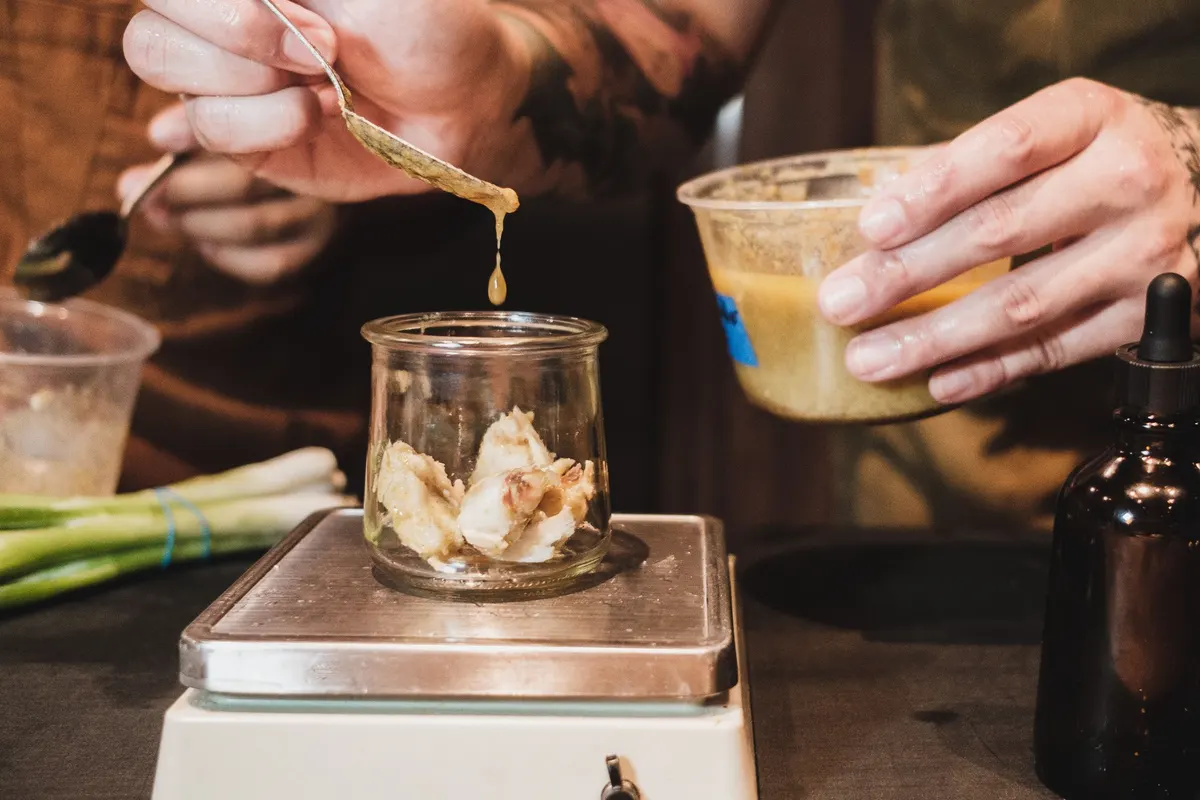
Next, pick a target food cost. Lightspeed, a restaurant software company, says most owners keep food costs between 28 and 35% of revenue. Divide the plate cost by your target to get a starting price. A $3.30 plate at a 30% target needs a price of $11.
- plate cost of the example item, container included
- $3.30
- target food cost, inside the usual range
- 30%
- starting price: the plate cost divided by the target
- $11
Treat that number as a floor, not the answer. The plate cost leaves out waste on a new recipe. And the price still has to make sense next to the rest of your menu. Each of those can move the price up.
What does the plate cost leave out?
New items waste more than old ones. Cooks are still learning the portion, and nobody knows yet how many will sell. TouchBistro, which also sells restaurant software, cites the author Roger Fields on this. He suggests allowing 10-15% for waste.
Costs to count before you set the price
- Waste while cooks learn the new portion
- Containers and sauce cups for takeout orders
- Extra prep time for any new step
- Staff training before launch day
- Ingredients left over when the item ends
Add the low end of that allowance to the example. The $3.30 plate becomes about $3.63. At the same 30% target, the price rises to about $12. The change per order is small, but it repeats on every order of the run.
New ingredients carry the largest hidden cost. A topping bought only for the special has to be used up when the item ends, or thrown away. Build the special around ingredients you already stock wherever you can. Add one new ingredient that guests will notice.
How should the price compare with your core items?
Guests judge a new price against what they usually order. Say your top seller costs $9.50. A special at $12 then asks guests for $2.50 more. That step up has to feel earned by something they can see, such as a premium ingredient or a fuller plate.
A special priced well under the core menu brings a different problem. Regulars may trade down from the item that earns you more. So set the new price level with your top seller or a little above it. The exception is a small add-on, such as a dessert or a drink.
| Position | What it tells guests | The risk |
|---|---|---|
| Under the top seller | A cheap way to try something new | Regulars trade down |
| Level with it | A straight swap for the usual order | Little reason to switch |
| A little above it | Something special, worth a small step up | It needs value guests can see |
| Far above it | A treat for a few guests | Few orders and more waste |
The ending of the price matters less than the step itself. Keep the price style your menu already uses. Then the new item looks like it belongs on the board.
Why judge it by dollars per order, not food cost?
A lower food-cost share does not always mean more profit. Bite, a kiosk software company, compares two items to show it. The higher-priced one has the worse food-cost share. Yet it earns $2.35 more per transaction.
Run the same check on the example. The special at $12 keeps $8.37 after its $3.63 plate cost. A $9.50 top seller with a $2.66 plate keeps $6.84. Each guest who swaps to the special leaves you $1.53 more.
- kept on each order of the special
- $8.37
- kept on each order of the top seller
- $6.84
- more for each guest who swaps
- $1.53
The special also has the higher food-cost share, about 30% against 28% for the top seller. A food-cost target alone would flag it as the weaker item. The dollars say the opposite, and the dollars pay the bills.
What can a chain that launches an item every week teach you?
One taco chain puts a new limited-time taco on its menu every week, 52 a year. Restaurant Business described the program in November 2022. At that time, the chain’s core menu of 19 tacos changed twice a year. Any weekly taco could earn a place on it.
Pitch new ideas
The culinary team brings fresh taco ideas about once a month.
then
Test in the kitchen
Each idea is judged on taste, looks, mess and how hard it is to make.
then
Limit new ingredients
Some tacos must use existing items. Others may add no more than two new ones.
then
Plan the calendar
Planning sheets are written a full quarter ahead.
before launch
Dry run in every store
Each restaurant makes the taco before it goes on sale.
The ingredient limit is a pricing tool. Each new ingredient is something you must buy, store and use up. Keeping that list short keeps the plate cost, and the waste, close to what you planned.
The weekly pace also gives guests a reason to return. Nation’s Restaurant News reported that the program builds frequency and anticipation, in the executives’ words. So price each special for repeat visits, not as a one-off windfall. A guest who comes back next week is worth more than one high check.
Does a limited-time offer raise the whole check?
- checks that include a limited-time offer, against checks without one
- 26% higher
- of consumers call new launches important, up from 48% in 2022
- 56%
Technomic is a research firm that tracks restaurant menus. At the industry’s spring show, its managing principal said checks with limited-time offers run 26% higher than checks without one. Guests come in for the new item, then add extras. Interest is growing too. Technomic said 48% of consumers called such launches important in 2022, and 56% do now.
That makes the add-on part of your pricing. Suggest a drink or a side that pairs with the special. Price the pair so it still clears your margin floor. Technomic called cold drinks and specialty drinks very high-margin opportunities for the operator, which makes them a natural partner for a special.
How can a multi-store group test a price before every store sells it?
A split test like this needs only a few weeks and a handful of stores. Pick stores with similar traffic and run both prices on the same dates. Then compare orders per store per day at each price, not total sales. If your stores are franchised, clear both test prices with your franchisor first.
What to keep the same during a price test
- The recipe and the portion size
- The photo and the spot on the menu
- The dates and the days of the week
- How staff mention the item at the counter
If both prices sell about the same number, keep the higher one. Your guests have told you the step up is fine. If the higher price sells far fewer, check the plate cost again before you cut the price.
How do you promote the item without discounting it?
The limited window does much of the selling, so a discount is rarely needed. TouchBistro and The Harris Poll surveyed 1,500 American diners in October 2024. Of them, 62% said a limited-time offer would motivate them to visit.
- of diners say a limited-time offer motivates a visit (TouchBistro, surveyed October 2024)
- 62%
- of fast-food guests had visited just to order one (The Harris Poll, reported September 2025)
- 31%
- would tell others about one they enjoyed (same study)
- 34%
MediaPost reported a separate Harris Poll study in September 2025. It found 31% of fast-food guests had gone to a restaurant specifically to order a limited-time item. And 34% said they would tell other people about one they enjoyed. So spend on getting the word out, not on a lower price. Our guide to setting up Google Ads for one location shows how to keep that spend tight.
Ways to show the item without cutting its price
- A photo of it on your Google Business Profile
- A small paid social ad around each store
- A table card and a mention at the counter
- A short creator video in launch week
- A note to your loyalty members
Short creator videos help most in launch week, while the item is still news. CreatoRain, which publishes this guide, makes them for chains and franchises, done for you. It charges $300 a video, and the creator’s pay is already inside that price. Count it in your marketing budget like any other launch cost.
When should the item stay, come back or go?
Decide what success means before launch day. Bite suggests an order floor, a margin floor, a waste limit and an add-on target. Then the call at the end is arithmetic, not a feeling. Watch the first two to three weeks most closely, while interest is highest.
Write these down before the item goes on sale
- The fewest orders per store per day you will accept
- The fewest dollars each order must keep
- The most waste you will accept
- How often guests should add a drink or a side
Most specials should end, then come back. Technomic’s Joe Pawlak suggests repeating a successful item, since the sense of scarcity can reset within five or six months. A return run costs less to launch, because the recipe and the training already exist.
Price the return run from fresh plate costs, not last year’s card. Ingredient prices move, and the step up from your core menu may have moved with them. To see whether the launch promotion itself worked, read our guide on telling whether food influencers brought you customers.
Sources and method
Where each number comes from
- “28 and 35%” — Restaurant Menu Pricing: How to Set Prices for Profit (Lightspeed, updated March 29, 2026). Read October 7, 2026.
- “30%” — Restaurant Menu Pricing: How to Set Prices for Profit (Lightspeed, updated March 29, 2026). Read October 7, 2026.
- “10-15%” — Restaurant Menu Pricing: How to Price a Menu to Maximize Profits (TouchBistro, Katherine Pendrill, updated October 11, 2023). Read October 7, 2026.
- “$2.35” — The Hidden Profits in Limited-Time Offers (And How to Capture Them) (Bite blog, Corey Hines). Read October 7, 2026.
- “52” — How Velvet Taco puts 52 unique limited-time tacos on the menu every year (Restaurant Business, November 22, 2022). Read October 7, 2026.
- “19 tacos” — How Velvet Taco puts 52 unique limited-time tacos on the menu every year (Restaurant Business, November 22, 2022). Read October 7, 2026.
- “26% higher” — Limited-time offers have increased by triple digits since 2019 (Nation’s Restaurant News, Alicia Kelso, May 19, 2026). Read October 7, 2026.
- “56%” — Limited-time offers have increased by triple digits since 2019 (Nation’s Restaurant News, Alicia Kelso, May 19, 2026). Read October 7, 2026.
- “48%” — Limited-time offers have increased by triple digits since 2019 (Nation’s Restaurant News, Alicia Kelso, May 19, 2026). Read October 7, 2026.
- “1,500” — 2025 U.S. Diner Trends Report (TouchBistro with The Harris Poll, surveyed October 2024). Read October 7, 2026.
- “62%” — 2025 U.S. Diner Trends Report (TouchBistro with The Harris Poll, surveyed October 2024). Read October 7, 2026.
- “31%” — LTOs Drive Significant QSR Traffic, Per Recent Harris Poll (MediaPost, Teresa Buyikian, September 11, 2025). Read October 7, 2026.
- “34%” — LTOs Drive Significant QSR Traffic, Per Recent Harris Poll (MediaPost, Teresa Buyikian, September 11, 2025). Read October 7, 2026.
- “$3.30” — Our arithmetic: an example plate cost for a new item, container included, chosen to show the calculation. It is not any real restaurant’s figure. Measured October 7, 2026.
- “$11” — Our arithmetic: the example $3.30 plate cost divided by a 30% target food cost. Measured October 7, 2026.
- “$3.63” — Our arithmetic: the example $3.30 plate cost plus a 10% waste allowance (the low end of the 10-15% TouchBistro cites). Measured October 7, 2026.
- “$12” — Our arithmetic: $3.63 divided by a 30% target is $12.10, rounded to $12. Measured October 7, 2026.
- “$9.50” — Our arithmetic: an example price for a core-menu top seller, chosen to show the comparison. Measured October 7, 2026.
- “$2.50” — Our arithmetic: the example $12 special minus the example $9.50 top seller. Measured October 7, 2026.
- “$8.37” — Our arithmetic: the example $12 price minus the $3.63 plate cost. Measured October 7, 2026.
- “$2.66” — Our arithmetic: an example plate cost for the $9.50 top seller, 28% of its price. Measured October 7, 2026.
- “$6.84” — Our arithmetic: the example $9.50 price minus the $2.66 plate cost. Measured October 7, 2026.
- “$1.53” — Our arithmetic: $8.37 kept on the special minus $6.84 kept on the top seller. Measured October 7, 2026.
- “28%” — Our arithmetic: the example $2.66 plate cost divided by the $9.50 price. Measured October 7, 2026.
- “$300” — As published on our pricing page.
Pages quoted in this article
- Restaurant Menu Pricing: How to Set Prices for Profit (Lightspeed, updated March 29, 2026) Read October 7, 2026.
- Restaurant Menu Pricing: How to Price a Menu to Maximize Profits (TouchBistro, Katherine Pendrill, updated October 11, 2023) Read October 7, 2026.
- The Hidden Profits in Limited-Time Offers (And How to Capture Them) (Bite blog, Corey Hines) Read October 7, 2026.
- How Velvet Taco puts 52 unique limited-time tacos on the menu every year (Restaurant Business, November 22, 2022) Read October 7, 2026.
- How Velvet Taco keeps up with its Weekly Taco Feature (Nation’s Restaurant News, Alicia Kelso, April 11, 2024) Read October 7, 2026.
- Limited-time offers have increased by triple digits since 2019 (Nation’s Restaurant News, Alicia Kelso, May 19, 2026) Read October 7, 2026.
- 2025 U.S. Diner Trends Report (TouchBistro with The Harris Poll, surveyed October 2024) Read October 7, 2026.
- LTOs Drive Significant QSR Traffic, Per Recent Harris Poll (MediaPost, Teresa Buyikian, September 11, 2025) Read October 7, 2026.
Related questions
All 8 guides on Costs & ROI →Run more than one location? See how CreatoRain works for restaurant chains. See real campaigns in our case studies.