What percentage of sales should a restaurant spend on marketing?
Every budget sheet has a line marked marketing, and someone has to fill it in. The SBA’s general rule says spend 7–8 percent of revenue. That rule assumes margins most restaurants never see. So each store needs its own number.
Most restaurant guides put marketing at 3–6% of sales. Stay near the low end when your tables already fill. A new location’s first year or two needs 8% to 12%. Write down when that higher share steps back down. A franchisee counts the required ad-fund payment inside the total. Then price each line separately.
CreatoRain Team6 min read
CreatoRain is a done-for-you restaurant influencer marketing service for chains and franchises: CreatoRain's in-house team finds, invites and pays food creators and follows up until each video is posted.

What share of sales do restaurants spend on marketing?
Toast sells point-of-sale systems to restaurants. Its budget guide tells owners to allocate 3–6% of revenue to marketing. Two other restaurant software firms, Sauce and Altametrics, give the same range. Altametrics ties it to established restaurants with steady traffic.
- of revenue to marketing, Toast’s advice to restaurant owners
- 3–6%
- of revenue, the SBA’s general rule for small businesses
- 7–8 percent
- of sales, the median full-service restaurant’s income before taxes
- 2.8 percent
Actual spending can sit lower still. In 2019, the SBA’s blog cited Small Business Trends on advertising alone. Restaurants spent 1.93% of revenue on it. That figure covers advertising alone, not the whole marketing line.
So treat 3–6% as a starting range, not a target. Your spot inside it depends on how busy you are and how new you are. A franchise agreement can also fix part of it for you.
Why is the restaurant number lower than general small-business advice?
The SBA’s marketing plan tool gives small businesses a rule of 7–8 percent of revenue. Then it adds a condition. The rule assumes margins of 10–12 percent after every other expense, marketing included.
Few restaurants clear that bar. The National Restaurant Association studied data from more than 900 restaurants. The median full-service restaurant kept 2.8 percent of sales before taxes. The median limited-service restaurant kept 4.0 percent.
What a sales dollar pays for before marketing
- Food and drink, bought before the guest orders
- Wages and benefits for the kitchen and the floor
- Rent, utilities and insurance
- Card fees, repairs and supplies
- The profit you keep, often the smallest share
At limited-service restaurants, food, drink and labor took a median of 65 cents of every sales dollar. Marketing comes out of what is left. That is why restaurant guides start lower than the general rule.
How much more should a new location spend?
A new location starts with no regulars. Nobody has a habit of eating there yet. Altametrics puts new restaurants at 8% to 12% of projected revenue for their first one to two years.
Everyday range, top end (Toast)
6%Entering a new market, top end (Sauce)
10%New restaurants, top end (Altametrics)
12%
Sauce gives a similar range for growth. It suggests 8% to 10% when you enter a new market or recover from a slow period. A franchisee opening in a new town fits both cases.
The SBA’s tool sets the outer edge. It says budgets vary from 2 percent of sales to 20 percent while a business gears up something new. Treat the top of that as a ceiling, not a plan.
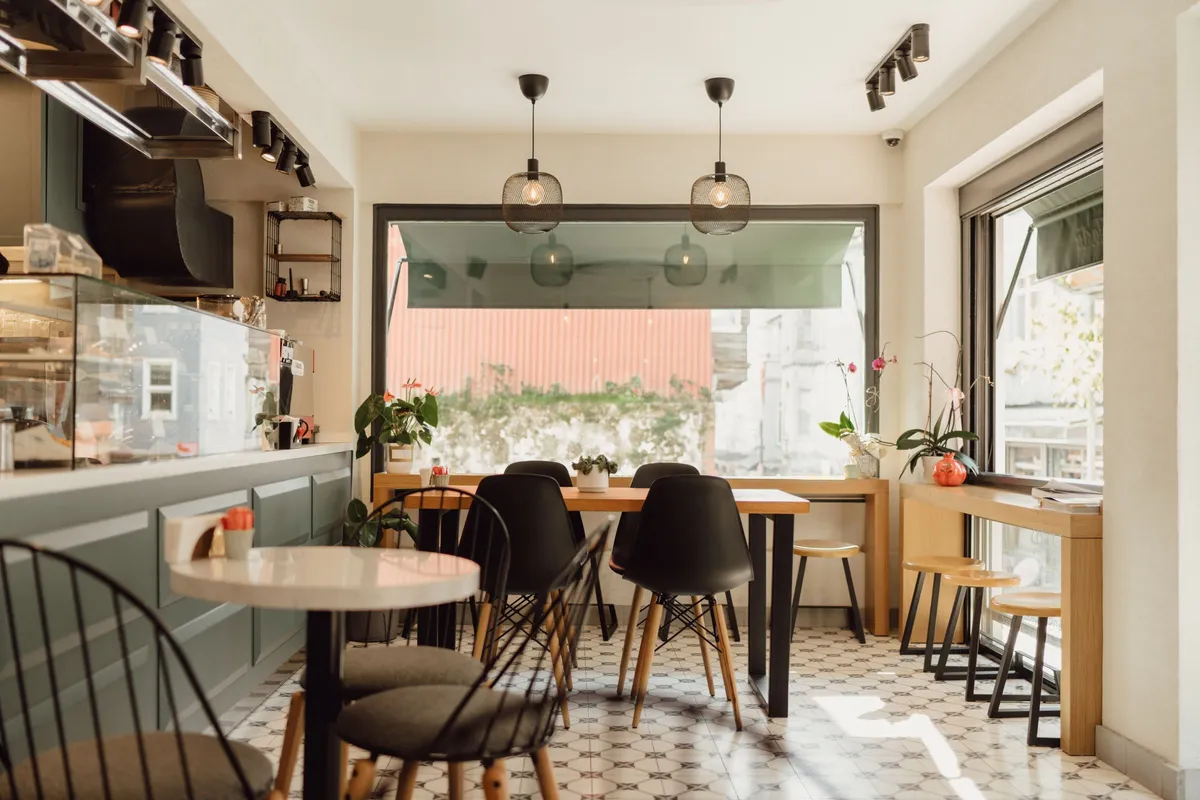
A launch share needs an end date. Pick how many months it lasts and what it drops to. Write both into the opening plan, so the spending does not drift on. Our guide to promoting a new restaurant before it opens covers the weeks before day one.
If you own a franchise, does the ad fund count?
Yes, and it comes off the top. The federal consumer guide to buying a franchise says franchisees often pay a percentage of sales into advertising funds. Those funds can be national, regional or local.
Read the disclosure document
Find the advertising section and the required contribution.
then
Note it as a share of sales
This is fixed, whatever you decide next.
then
Ask what reaches your market
National ads may never run near you.
then
Set your total share
Pick it from the ranges in this guide.
then
Subtract the contribution
What is left is your local budget.
Not all of it may reach your street. The same guide warns that some ad fees may go to national ads or to recruiting new franchise owners. The rules sit in Item 11 of the Franchise Disclosure Document.
Questions to ask about the ad fund
- What share of the fund is spent on advertising in your area?
- What share goes to national ads, admin costs or selling more franchises?
- Do franchisees have any control over how the money is spent?
- Do all franchisees and company stores pay in equally?
- Do you need the franchisor’s consent to buy your own ads?
Ask the last question before you book local ads or creator visits. If the answer is yes, get that consent in writing first. Our guide to how franchisees market their location locally shows what to spend the local share on.
What belongs inside the marketing line?
A percentage only helps if you count the same things every month. Put every cost meant to bring guests in or back into one line. Leave out costs you would pay with no marketing at all.
| Cost | Count it? | Why |
|---|---|---|
| Paid social and search ads | Yes | Its only job is to bring guests in |
| Photography and creator videos | Yes | It shows the food to people who have not tried it |
| Comp meals for guests you invite | Yes, at food cost | It is spent to be talked about |
| Loyalty discounts and offers | Yes | It brings guests back |
| Menu printing for the dining room | No | You would print it anyway |
| Staff meals | No | It is a labor cost |
Count agency, software and freelancer fees in the same line as the work they produce. Otherwise a campaign looks cheap because half its cost sits somewhere else.
How do you turn the percentage into a monthly budget?
- Take your sales for the last full year, or a forecast if you are new.
- Pick a share from the ranges above, higher if you are new or quiet.
- Divide by twelve, or set it month by month if sales are seasonal.
- Subtract fixed commitments first, such as an ad fund or a subscription.
- Spend the rest on lines you can add or drop each month.

Take an example month of $80,000 in sales. At the low end of the range, the budget is $2,400. At the high end, it is $4,800. That gap is a real choice, so make it on purpose.
- a month at the low end of 3–6%, on $80,000 of sales
- $2,400
- a month at the high end, on the same $80,000
- $4,800
Review the number every quarter. A slow season can push sales down while fixed costs stay put. Then the share you really spend is higher than the one you picked.
How do you split one budget across several locations?
Set the share per location, not for the whole group. Each store’s own sales set its budget. That way a busy store does not quietly fund a quiet one, unless you decide it should.
Shared costs need a rule too. One batch of menu photos can serve every store. Split that cost by each store’s share of sales, so the stores stay comparable.
Where does a per-video cost fit inside the budget?
A cost priced per item is the easiest kind to fit. You pick how many you want this month and multiply. A monthly retainer costs the same in a slow month as in a busy one.
- four creator videos at $300 each
- $1,200
- the low-end budget on $80,000 of sales
- $2,400
Take the same $80,000 month. Four videos at $300 each come to $1,200. That fits inside the $2,400 low-end budget, with room left for ads and offers.
What a per-video price should tell you up front
- How many videos you get, and by when
- Whether the creator’s pay is inside the price
- Who invites the creators and follows up
- What you still pay, such as the meal
- Whether you may reuse the videos in ads
One per-video option is CreatoRain, the company that publishes this guide. It makes creator videos for chains and franchises, done for you. It charges $300 a video, with the creator’s pay included. That one price covers the creator and the video. You still count the meal at food cost in the same line. Our guide to what it costs to get food influencers to your restaurant breaks a visit into its parts.
How do you check whether the budget is working?
You will not get a perfect answer, but you can get a useful one. Compare sales with the same weeks last year, not last month. Seasons move restaurant sales more than most campaigns do.
Simple checks that need no software
- Ask guests how they heard about you, and tally each answer
- Give each offer its own code or wording
- Note the date each ad, video or mailer went out
- Compare sales with the same weeks last year
- Drop the line that brings nobody in after a fair try
Lines you can switch on and off make this easier. If something works, add more of it next month. If it does not, stop it without paying out a contract. To choose who does the work, read our guide on an agency, software or doing it yourself.
Sources and method
Where each number comes from
- “3–6%” — How to Create Your Restaurant Marketing Budget [Template] (Toast, Robert Hale, November 4, 2024). Read October 7, 2026.
- “7–8 percent” — Create Your Marketing Plan: Strategic Marketing 6.2 Marketing Plan Tool (U.S. Small Business Administration, SBA Ascent). Read October 7, 2026.
- “10–12 percent” — Create Your Marketing Plan: Strategic Marketing 6.2 Marketing Plan Tool (U.S. Small Business Administration, SBA Ascent). Read October 7, 2026.
- “from 2 percent of sales to 20 percent” — Create Your Marketing Plan: Strategic Marketing 6.2 Marketing Plan Tool (U.S. Small Business Administration, SBA Ascent). Read October 7, 2026.
- “6%” — How to Create Your Restaurant Marketing Budget [Template] (Toast, Robert Hale, November 4, 2024). Read October 7, 2026.
- “10%” — How Much Should a Restaurant Spend on Marketing? (Sauce, April 2, 2025). Read October 7, 2026.
- “12%” — How Much Should a Restaurant Spend on Marketing? (Altametrics, Derrick McMahon, September 23, 2026). Read October 7, 2026.
- “2.8 percent” — New Resource from National Restaurant Association Provides Insights into Operational Realities (National Restaurant Association, August 20, 2025). Read October 7, 2026.
- “4.0 percent” — New Resource from National Restaurant Association Provides Insights into Operational Realities (National Restaurant Association, August 20, 2025). Read October 7, 2026.
- “65 cents of every sales dollar” — New Resource from National Restaurant Association Provides Insights into Operational Realities (National Restaurant Association, August 20, 2025). Read October 7, 2026.
- “more than 900 restaurants” — New Resource from National Restaurant Association Provides Insights into Operational Realities (National Restaurant Association, August 20, 2025). Read October 7, 2026.
- “1.93%” — How to Get the Most From Your Marketing Budget (Rieva Lesonsky, U.S. Small Business Administration blog, July 9, 2019, citing Small Business Trends). Read October 7, 2026.
- “8% to 12%” — How Much Should a Restaurant Spend on Marketing? (Altametrics, Derrick McMahon, September 23, 2026). Read October 7, 2026.
- “8% to 10%” — How Much Should a Restaurant Spend on Marketing? (Sauce, April 2, 2025). Read October 7, 2026.
- “Item 11” — A Consumer’s Guide to Buying a Franchise (Federal Trade Commission). Read October 7, 2026.
- “$80,000” — Our arithmetic: an example month of sales, chosen to show the calculation. It is not any real restaurant’s figure. Measured October 7, 2026.
- “$2,400” — Our arithmetic: 3% (the low end of Toast’s 3–6% range) of the example $80,000 month. Measured October 7, 2026.
- “$4,800” — Our arithmetic: 6% (the high end of Toast’s 3–6% range) of the example $80,000 month. Measured October 7, 2026.
- “$1,200” — Our arithmetic: four videos at $300 each. Measured October 7, 2026.
- “$300” — As published on our pricing page.
Pages quoted in this article
- How to Create Your Restaurant Marketing Budget [Template] (Toast, Robert Hale, November 4, 2024) Read October 7, 2026.
- How Much Should a Restaurant Spend on Marketing? (Altametrics, Derrick McMahon, September 23, 2026) Read October 7, 2026.
- How Much Should a Restaurant Spend on Marketing? (Sauce, April 2, 2025) Read October 7, 2026.
- Create Your Marketing Plan: Strategic Marketing 6.2 Marketing Plan Tool (U.S. Small Business Administration, SBA Ascent) Read October 7, 2026.
- New Resource from National Restaurant Association Provides Insights into Operational Realities (National Restaurant Association, August 20, 2025) Read October 7, 2026.
- How to Get the Most From Your Marketing Budget (Rieva Lesonsky, U.S. Small Business Administration blog, July 9, 2019) Read October 7, 2026.
- A Consumer’s Guide to Buying a Franchise (Federal Trade Commission) Read October 7, 2026.
Related questions
All 8 guides on Costs & ROI →Run more than one location? See how CreatoRain works for restaurant chains. See real campaigns in our case studies.