How do you fill a restaurant on slow weeknights?
Saturday has a line at the host stand. Tuesday has a few tables and a full crew. The rent and the payroll cost the same both nights. The fix is not a cheaper Tuesday. It is a reason to come that night.
Find your weakest night in your own sales. Give guests a reason that exists only on that night. A dish, a set menu or an event beats a blanket discount. Post it on the day, while diners are still deciding. Book local creators to visit that night. Judge it against the same night in earlier weeks.
CreatoRain Team7 min read
CreatoRain is a done-for-you restaurant influencer marketing service for chains and franchises: CreatoRain's in-house team finds, invites and pays food creators and follows up until each video is posted.

Which nights are usually the slowest?
Your own sales report is the count that matters. The industry pattern is still a useful check. Toast, the restaurant software company, counted reservations at full-service restaurants on its platform. It looked at July to September 2024. Saturday took the biggest share of the week, and the first nights took the smallest.
- of reservations fell on Saturday
- 27%
- fell on Tuesday
- 8%
- fell on Monday
- 6%
Toast put it plainly. “Monday (6%) and Tuesday (8%) are still the slowest days for reservations.” Bookings miss walk-ins and takeout, though. So pull covers and sales by day of the week for the last couple of months. Circle the night that is weakest in most weeks. Work on that night first, and only that night until it moves.
Why are the first nights of the week so quiet?
It is mostly habit, not your food. People keep Friday and Saturday for going out. They keep the start of the week for cooking, errands and early nights. A family with school the next morning wants to be home by eight. A better menu alone rarely moves the slowest night, because the menu never kept people home.
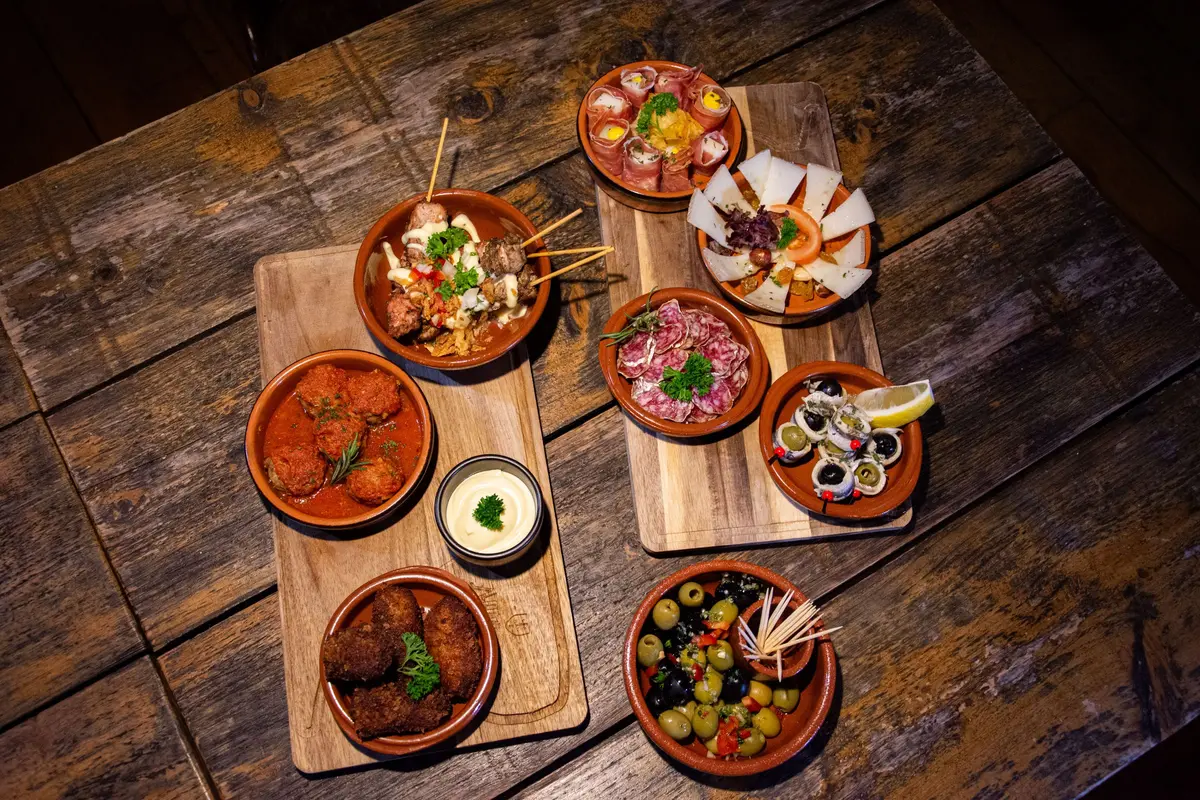
There is good news in the same Toast data. The early-week nights grew fastest against a year earlier. Monday and Tuesday reservations were each up 11%, while Saturday dipped. Guests can be moved onto these nights. They need a reason to pick one.
Will a weeknight discount fill the room?
Diners say they would use one. In the National Restaurant Association’s 2022 industry report, nearly 80% of adults said they would use deals on less busy days. And 76% said they would likely use deals between the usual meal times. That suits an early weeknight dinner.
- of adults would use deals on less busy days
- Nearly 80%
- of operators planned to add discounts, deals or value promotions
- Forty-seven percent
- of operators said diners are more value conscious now
- 95%
That is the case for a discount, and also its problem. When so many operators add deals, yours is one more among many. It also teaches regulars that the same meal is cheaper if they wait. Restaurant Dive reported on the operator survey. Reduced-price value or combo meals worked for only 15% of family dining operators.
Counter-service stores have more room here. Seventy-five percent of adults said they would consider a daily special or discount at a quick-service place. So a discount is not wrong. Tie it to something that happens only that night, and keep it small enough to stop.
What can you offer on a slow night besides a discount?
| Offer | Why it suits a slow night | Watch for |
|---|---|---|
| A dish or set menu served only that night | A reason to pick this night, not a cheaper Saturday | Prep that fits the crew you already schedule |
| Smaller plates at a lower price | It fits a work-night appetite and budget | A price that keeps your margin |
| A bundle for two or a family meal | One easy decision for the whole table | Whether takeout can serve it too |
| A trivia night, a tasting or a chef’s table | A fixed night that a group can plan around | The same night every week |
| A regulars’ perk that counts only that night | It rewards the guests most likely to return | Every server knowing the perk |
Diners have asked for these. In the same Association report, 72% of adults said they would likely order smaller portions at a lower price. And 68% said they would likely order multicourse meal bundles. Our guide to pricing a limited-time offer shows how to keep the margin. Get your franchisor’s yes on any new dish or price before it runs. Then keep one offer for at least six weeks before you judge it.
How do events and regulars’ nights bring people back?
An event gives a group something to plan around. A trivia night or a tasting at the counter turns the slow night into the night something happens. A regulars’ night does the same for guests you already have. Offer a dish they can only get then, or a perk that counts only that night.

Before you launch a weeknight event
- The same night every week, so people can plan around it
- A start time that fits a work night
- Something worth a photo, such as a dish or a pour at the table
- A reason to book ahead, such as limited seats
- One manager who owns it from start to finish
Ask your regulars what would bring them in on a Monday. They know the neighborhood’s week better than any survey. Asking them is already the first invitation.
Can you run a weeknight drink special?
Check before you print it. Drink prices fall under state and local liquor rules, and some states ban the classic happy hour. Massachusetts is one. Its liquor regulation bars drinks “at a price less than the price regularly charged for such drinks during the same calendar week.” It also bars advertising any practice the rule prohibits.
A weeknight offer that avoids most drink-rule trouble
- Build the offer around food, such as a dish, a set menu or a bundle
- Include a drink only inside a meal package, where your state allows it
- Keep printed drink prices the same all week where your state requires it
- Ask the licensing board before you post any drink price online
- Check the franchise agreement for brand rules on drink pricing
How do you aim paid ads at your slow nights?
Run search ads only on the days you want to fill. Google Ads ad scheduling lets you pick the hours or days your ads show. Set the campaign to run Monday and Tuesday, from late morning to early evening. That is when people decide where to eat tonight.
Mind the budget rules first. Google changed how ad schedules spend on June 1, 2026. Its budget pacing note says you are never charged more than twice your daily budget per day. The month is capped at 30.4 times the daily budget. A campaign running only a few days a month will often hit the daily cap each day.
- daily budget on a Monday and Tuesday schedule
- $25
- the most it can spend on each scheduled day
- $50
- the most it can spend in a month with eight Mondays and Tuesdays
- $400
- the most in a month with ten of them
- $500
So take what you want to spend on each slow night, and set the daily budget to that amount divided by two. The rest of the setup, from keywords to location targeting, is in the single-location Google Ads walkthrough. If your brand runs an ad co-op, ask whether it already buys search ads in your area before you add your own.
When should you tell people about a weeknight offer?
Tell them ahead, and again on the day. In the Toast data, 45% of reservations were made for the same day. A lunchtime post about tonight reaches people while they still decide.
Where to post a weeknight offer
- An offer post on each store’s Google Business Profile, set to repeat weekly
- The store’s social accounts, on the morning of the night
- The reservation page and the online ordering page
- A table card and a line on every receipt during the week
Google makes the first item easy. A Business Profile offer post takes a title, dates and a time. A “Repeats” menu can show it weekly. A group can share one post across several profiles at once. Google archives posts older than 6 months unless a date range is set. The Business Profile setup guide covers the rest of the listing.
Why invite food creators on a slow night instead of a Saturday?
Your own posts go to people who already follow you. Toast surveyed diners on how they find new restaurants. Word of mouth came first, and walking past came second. Neither one starts with your own account. A local creator’s visit puts your Tuesday in front of people who do not follow you yet.
- named word of mouth, the top channel
- 38%
- found one by walking or driving past it
- 30%
A slow night is also the best night to host a creator. The kitchen has time to plate the dish well. A server can explain the special, and the creator can film without a full room behind them. The video can show the weeknight offer itself, so viewers learn what that night is for.

Invite creators for the night you are trying to fill, and tell them the offer. If the meal is free, their post has to say so. The free-meal disclosure rules give the exact wording. For the first message itself, adapt the template in the invitation guide.
CreatoRain, which publishes this guide, books creators from its food-creator network to visit every store you list. It pays them and follows up until each video is posted. Each video is $300, creator pay included.
What does a slow-night plan look like across many stores?
The parts that did the work were in place before any creator arrived. There was one night and one reason that existed only then. There was also a count that compared the same night week to week.
How do you tell if a slow night is filling?
Pick the night
Use the weakest night in your own sales, not the industry chart.
before you change anything
Write down the baseline
Record covers and sales on that night over recent weeks.
Run one offer
Keep the same offer on the same night, posted on the day.
Ask and count
Ask new guests how they heard, and count covers each week.
Compare like with like
Set this Tuesday against earlier Tuesdays, never against Saturday.
Keep, change or stop
After about six weeks, keep what moved the night.
Watch the nights around it too. If Tuesday fills while Wednesday empties, the offer moved your regulars. That can still pay if the Tuesday offer costs less than an empty Wednesday did. But it is a different result, and you should know which one you got.
A slow night rarely turns around in a week. Give it a fixed offer, a fixed night and an honest count. Within a couple of months you will know whether to keep going.
Sources and method
Where each number comes from
- “27%” — Toast Data: Reservation Trends Shift to Slower Days and Early Dinners (Toast newsroom, December 10, 2024). Read October 8, 2026.
- “2024” — Toast Data: Reservation Trends Shift to Slower Days and Early Dinners (Toast newsroom, December 10, 2024). Read October 8, 2026.
- “6%” — Toast Data: Reservation Trends Shift to Slower Days and Early Dinners (Toast newsroom, December 10, 2024). Read October 8, 2026.
- “8%” — Toast Data: Reservation Trends Shift to Slower Days and Early Dinners (Toast newsroom, December 10, 2024). Read October 8, 2026.
- “11%” — Toast Data: Reservation Trends Shift to Slower Days and Early Dinners (Toast newsroom, December 10, 2024). Read October 8, 2026.
- “45%” — Toast Data: Reservation Trends Shift to Slower Days and Early Dinners (Toast newsroom, December 10, 2024). Read October 8, 2026.
- “38%” — How Guests Discover New Restaurants in 2026 (Caroline Price, Toast, July 30, 2026). Read October 8, 2026.
- “30%” — How Guests Discover New Restaurants in 2026 (Caroline Price, Toast, July 30, 2026). Read October 8, 2026.
- “2022” — 7 value propositions with potential (National Restaurant Association, February 9, 2022). Read October 8, 2026.
- “nearly 80%” — 7 value propositions with potential (National Restaurant Association, February 9, 2022). Read October 8, 2026.
- “Nearly 80%” — 7 value propositions with potential (National Restaurant Association, February 9, 2022). Read October 8, 2026.
- “76%” — 7 value propositions with potential (National Restaurant Association, February 9, 2022). Read October 8, 2026.
- “72%” — 7 value propositions with potential (National Restaurant Association, February 9, 2022). Read October 8, 2026.
- “68%” — 7 value propositions with potential (National Restaurant Association, February 9, 2022). Read October 8, 2026.
- “Forty-seven percent” — NRA: 95% of restaurant operators say diners are more value-conscious (Julie Littman, Restaurant Dive, February 10, 2025). Read October 8, 2026.
- “95%” — NRA: 95% of restaurant operators say diners are more value-conscious (Julie Littman, Restaurant Dive, February 10, 2025). Read October 8, 2026.
- “15%” — NRA: 95% of restaurant operators say diners are more value-conscious (Julie Littman, Restaurant Dive, February 10, 2025). Read October 8, 2026.
- “2025” — NRA: 95% of restaurant operators say diners are more value-conscious (Julie Littman, Restaurant Dive, February 10, 2025). Read October 8, 2026.
- “Seventy-five percent” — NRA: 95% of restaurant operators say diners are more value-conscious (Julie Littman, Restaurant Dive, February 10, 2025). Read October 8, 2026.
- “June 1, 2026” — Changes to Google Ads budget pacing for Ad Scheduling (Google Ads Help). Read October 8, 2026.
- “30.4” — Changes to Google Ads budget pacing for Ad Scheduling (Google Ads Help). Read October 8, 2026.
- “6 months” — Create & manage posts on your Business Profile (Google Business Profile Help). Read October 8, 2026.
- “$25” — Our example input: a daily budget of $25 on a Google Ads campaign scheduled to run on Mondays and Tuesdays only. Measured October 8, 2026.
- “$50” — Our arithmetic: Google Ads says you will never be charged more than twice your daily budget per day. So a $25 daily budget can spend at most $50 on each scheduled day. Measured October 8, 2026.
- “$400” — Our arithmetic: $50 a day (twice a $25 daily budget) times the eight Mondays and Tuesdays in a month that has four of each is $400. Measured October 8, 2026.
- “$500” — Our arithmetic: $50 a day (twice a $25 daily budget) times the ten Mondays and Tuesdays in a month that has five of each is $500. Measured October 8, 2026.
- “$300” — As published on our pricing page.
Pages quoted in this article
- Toast Data: Reservation Trends Shift to Slower Days and Early Dinners (Toast newsroom, December 10, 2024) Read October 8, 2026.
- How Guests Discover New Restaurants in 2026 (Caroline Price, Toast, July 30, 2026) Read October 8, 2026.
- 7 value propositions with potential (National Restaurant Association, February 9, 2022) Read October 8, 2026.
- NRA: 95% of restaurant operators say diners are more value-conscious (Julie Littman, Restaurant Dive, February 10, 2025) Read October 8, 2026.
- 204 CMR 4.00: Prohibition of certain practices (Massachusetts Alcoholic Beverages Control Commission) Read October 8, 2026.
- About ad scheduling (Google Ads Help) Read October 8, 2026.
- Changes to Google Ads budget pacing for Ad Scheduling (Google Ads Help) Read October 8, 2026.
- Create & manage posts on your Business Profile (Google Business Profile Help) Read October 8, 2026.
Related questions
All 5 guides on Local & Google →Run more than one location? See how CreatoRain works for restaurant chains. See real campaigns in our case studies.